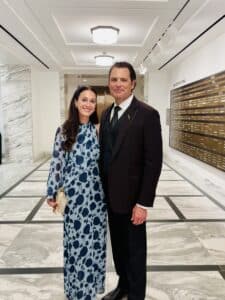
Lee Kirby, Salute Co-Founder and retired Army Colonel, interviewed David Britt, a US Navy Veteran and current Executive Vice President, Federal for Salute.
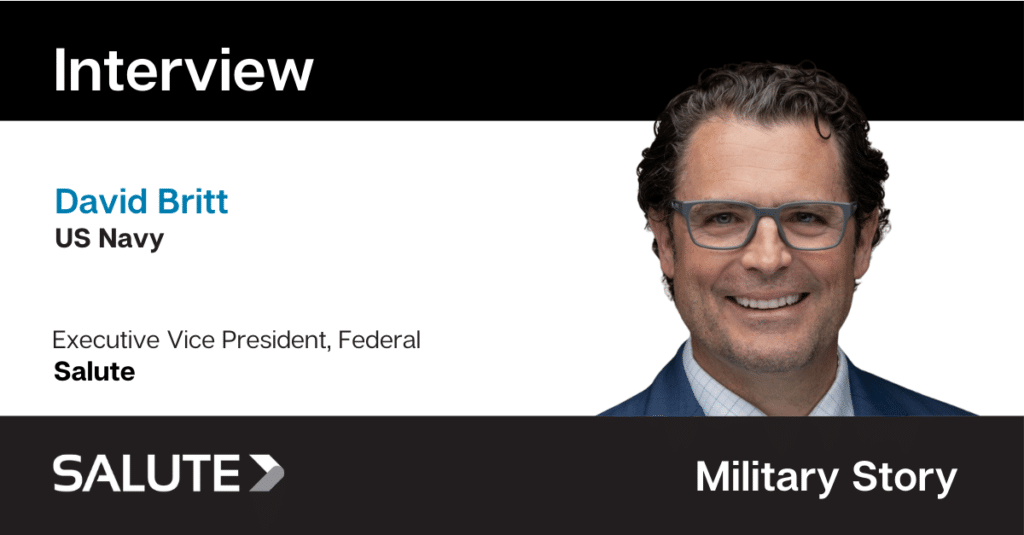
Before we dig in, our readers would love to get to know you a bit. Can you tell us a bit about your childhood “backstory”?
I grew up in Russellville, Kentucky, the oldest of 3 brothers. My brothers and I all spent time milking Holsteins and working on our farm. My Dad was a Veterinarian and my Mom was a Psychotherapist – which made for an interesting environment for my brothers and I in our formative years!
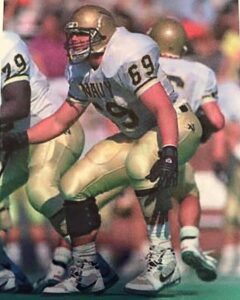
All three of us wanted to get out of doing farm chores as much as possible, so as soon as we could, we all played every sport available. We all excelled in football and each of played into college, with me playing football for the Unites States Naval Academy as an offensive tackle. I majored in Chemistry at Navy, as I wanted to be a Navy Flight Surgeon, however, I was waitlisted for medical school following my graduation/commissioning in May of 1992. As such, the Navy directed me to report as ship’s company to USS Guam as a deck division officer. It took me quite some time, but I eventually realized, while this was not where I wanted to be, it was where I needed to be.
Onboard Guam I was able to develop my leadership skills, work hard to prove myself and be a part of a large organization that took part in very important Naval operations. In fact, 2nd Lieutenant Erich Sanchak, USMC, was deployed aboard with me during our 1994 deployment to the Mediterranean Sea and Indian Ocean. Erich was a Marine Officer assigned to the 22nd Marine Expeditionary Unit (MEU), which was embarked on the USS Guam in the summer of 1994.
Can you tell us a bit about your military background?
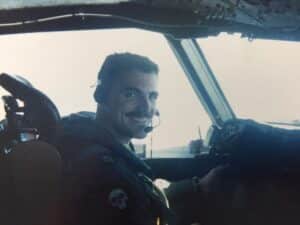
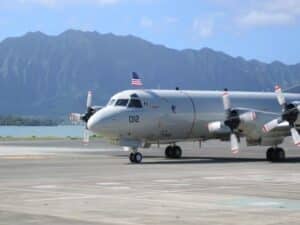
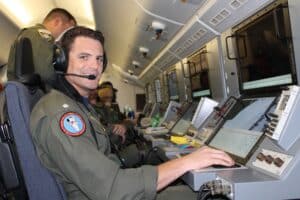
While my time aboard USS Guam gave me great perspective about the Navy, I knew that I didn’t want to work that hard for the rest of my Navy career! I applied to and was selected for Navy flight school training in the spring 1995 and eventually earned my wings and reported to a Navy Reconnaissance and Surveillance squadron in Hawaii flying P-3C Orions.
I eventually spent 25+ years in the Navy and along the way I was a Test Pilot, Squadron Department Head, Reconnaissance Wing Staff Officer, Officer In Charge, Chief Technology Officer (x2) for Major Navy programs and served on the Secretary of Defense Staff. These stops allowed me to put my fingerprints on some really interesting technologies for our Sailors and Marines.
My last tour in the Navy was as the Navy’s Secure Cloud program manager, where I needed to provide secure WiFi networking to Navy shore infrastructure in order to securely deliver Microsoft O365 to Sailors. I executed a large contract with Century Link in order to wire 123 navy facilities for WiFi. I worked closely with Century Link’s Federal director, Erich Sanchak, to make this happen. This was, of course, a ‘full circle’ moment!
What are you doing today?
I recently joined Salute (December 2025) to build our Federal and Sovereign Government business!
Can you share an interesting experience from your military career? What lesson did you take from it?
Goodness, I have so many, and being a Naval Flight Officer, of course many of them are more suitably embellished over a cold beer! I suppose I have one very relevant story that I can share, I’ll keep it to just the wavetops though! In 2009 I was the Officer-in-Charge of an experimental, highly classified program in which the Navy purchased several extremely high altitude, long endurance unmanned aircraft for long range reconnaissance. I directed the deployment of these to the Persian Gulf, where the airframes operated, while my teams piloted them from Maryland. My flight crews would fly these for 30+ hours per flight while conducting surveillance of the Persian Gulf region (and beyond).
During one of our early missions, we temporarily lost control of one of the aircraft and inadvertently flew it over the coast and into the airspace of a country we were surveilling, essentially an international incident. I (along with the program’s sponsor) were summoned to the US Navy Admiral in charge of the region (US Navy Fifth Fleet) to answer for this loss of control. As I began to answer in a very technical manner about how the airframe worked, the Admiral came out from behind his desk and yelled at me with so much vigor, he lost his shoe. I immediately capitulated and explained it was my responsibility to ensure these incidents should not happen and that I have put several layers of new checklist items in place to make sure it would never happen again. I was sure that I would be leaving his office to be re-assigned to a desk somewhere, to sit out my career. To my surprise, he put me back in charge and my teams executed with precision from that point onward.
That platform eventually became known as the MQ-4C Triton and today the Navy flies them globally, around the clock. Oh, and that Admiral that flame sprayed me while losing his shoe? Well, we both eventually got re-assigned to larger roles. He became a 4-star Admiral with incredible clout, I went on to my first CTO position for another Navy aircraft known as the P-8 Poseidon. In his job, he held the purse strings for the very work I was doing, so I was forced to continually brief him on program milestone progress and essentially ask for more money.
He always looked sideways at me when I had to visit him, but I took accountability for the program and people I was delivering for the Navy – and while he didn’t always like what I was asking for, I was able to guide the program to a successful delivery. The message was clear, take accountability for the people and programs entrusted to me.
Did your military experience help prepare you for business and leadership? How?
Absolutely, the Navy trained me to be the best leader I could be for the people I was entrusted to lead. Each one of the stops in my Navy career, required a team to get the mission accomplished, and I served at each level of those teams along the way, from Ensign to Captain. I experienced great leadership, lack of leadership, leadership under extreme duress, subtle leadership and ‘in-my-face’ leadership – learning from each version. When I was ultimately, the leader counted upon, all of those lessons forged my own leadership style. My thoughts around teamwork translate directly into the types of successful corporate work I have been a part of since I retired from the Navy in 2017.
None of us are able to achieve success without some help along the way. Is there a particular person who you are grateful towards who helped get you to where you are? Can you share a story?
Part of being an effective leader is also being a mentor to those you lead. I have so many people that I am grateful to during my Navy career. For example, my first Executive Officer onboard USS Guam, Captain Pete Masciangelo, recognized I might be a good fit flying Navy aircraft, he encouraged me to apply to flight school (while I was scared of flying, by the way). My Anti-Submarine Warfare Training Center Commanding Officer, Captain Steve Platamone, pulled me into two tough assignments following his command, which paved my path into the jobs I wanted to pursue later in my career. My Commanding Officer at my squadron in Maine (VP-92), Admiral Scott Fuller, gave me pretty tough assignments during an arduous deployment cycle to Japan, Diego Garcia and Qatar. Through my career, I was lucky to have these folks on speed dial and they always helped me think through decisions.
If you could inspire a movement that would bring the most amount of good to the most amount of people, what would that be?
I would hope to inspire a movement that encouraged personal accountability through physical exercise. I try to break a sweat every day. Sometimes that is at the gym, on a walk, chasing a stupid golf ball or pushing a vacuum cleaner. Physical activity provides me an opportunity to think, makes me physically feel better and breaks me away from the noise for enough time to reset – even if it is only for 20 minutes – it’s important to continually move. It’s better to wear out than to rust out….